Parents
Home | Parents
Your support makes a difference.
When your child comes to you excited about a career in manufacturing — or a technical high school — your reaction matters more than you know. This page is here to help you understand what manufacturing really looks like today, what the pathways are and why your encouragement could be the thing that changes their life.
What is manufacturing today?
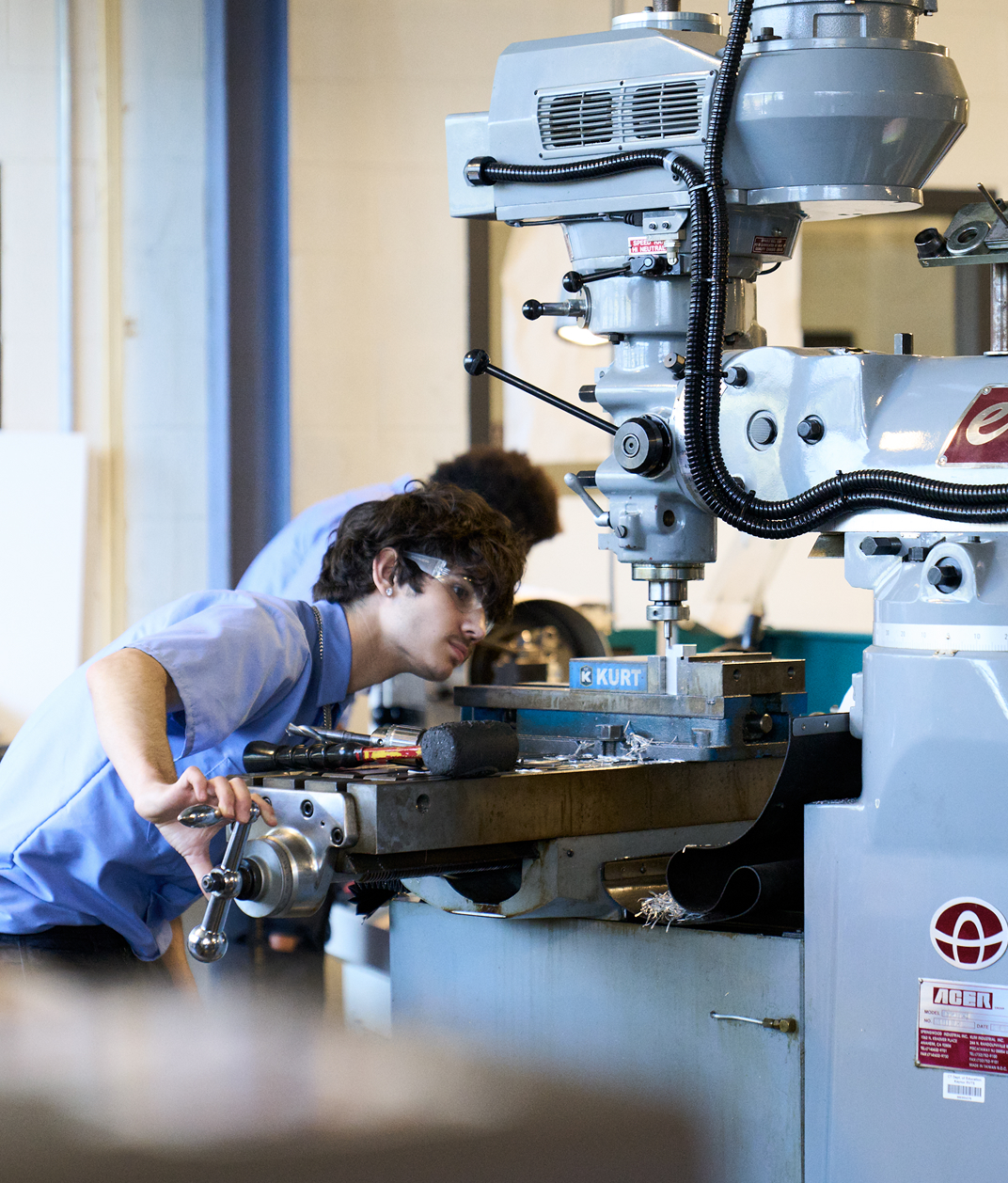
Manufacturing isn’t what it used to be. Today it means robotics, aerospace, precision engineering, advanced technology and so much more. Get up to speed on what your child could be stepping into.
Understanding the Pathways
From technical high schools to apprenticeships, certificates and college programs — there are more ways into manufacturing than you might think. We’ll walk you through every option so you can have an informed conversation with your child.
Common questions from parents
Technical high schools are accredited, rigorous academic institutions that give students hands-on training in high-demand fields. Students graduate with the same diploma as a traditional high school plus real skills, industry certifications, and in many cases, apprenticeship hours already under their belt. For students who love building, creating and figuring out how things work, it can be the perfect fit.
Not at all. In fact, middle school is the perfect time to start exploring. Connecticut’s technical high schools are competitive, and getting familiar with the application process early gives your child a real advantage. Encourage them to attend open houses, explore programs online and get involved in hands-on activities like robotics clubs, STEM programs or maker spaces at their current school. The earlier your child discovers what excites them, the more prepared and confident they’ll be when it’s time to apply.
Visit Connecticut Technical Education and Career System to explore programs, open house dates, and everything you need to know to get started.
It’s never too late to explore. Many students discover their passion for hands-on learning mid-way through high school and make the switch to a technical program. The best first step is to reach out directly to a Connecticut technical high school to understand enrollment timelines, availability and how credits may transfer.
In the meantime, encourage your child to explore vocational electives, robotics clubs or STEM programs at their current school to get a feel for whether technical education is the right fit.
Absolutely. Technical high school does not close the door to college – they can pursue two- or four-year degrees, often with a clearer sense of direction and a head start in their field.
Beyond college, graduates can also enter apprenticeship programs that pay them while they train, or earn industry certifications that fast-track them into high-demand, well-paying careers. Many programs offer college credits as well, giving students a running start no matter which path they choose.
Yes! Manufacturing is growing, and it’s a smart path to financial independence. Connecticut manufacturers employ more than 153,600 workers and nearly 65% are actively hiring. While starting production salaries average around $50,000 to $60,000, specialized tech and engineering roles can top $100,000. These are clean, high-tech, and highly stable careers where your child can build a future without the burden of heavy student debt.
The skills learned in manufacturing, like critical thinking, problem-solving, precision, teamwork and technical know-how, are transferable across many industries. Whatever direction your child ultimately goes, these skills will serve them well.
Start right here at gotitmadect.com. Browse our articles, watch real stories from Connecticut manufacturers and students, and explore the pathways available. The more you know, the more confidently you can support your child’s curiosity.
U.S. state in aircraft engine and engine parts manufacturing
*data sourced from the U.S. Bureau of Economic Analysis
“What I like most about my job is knowing that it makes an impact on so many lives. With every project I complete, I realize I’m playing a role in the lives of people and families all around the world.”
Latest News
CONNECTICUT LAUNCHES “I CAN MAKE IT” CAMPAIGN TO INSPIRE THE NEXT GENERATION OF MANUFACTURERS
HARTFORD, CT – The Connecticut Office of Manufacturing (OOM), part of the Connecticut Department of Economic and Community Development (DECD), today launched “I Can Make…
Third Annual Connecticut Manufacturing Innovation Forum
Shaping the future of manufacturing